We’ve noticed you’re visiting from NZ. Click here to visit our NZS site.




What we do
Make informed decisions with data that proves your business impact. Clients can measure what matters with our tailored evaluations, literature reviews, case studies, and thematic analysis that goes beyond just data analytics. Combining cutting-edge methodologies with real-world experience, we offer you practical recommendations to enhance performance.
-

-

-


Mixed-method Evaluations
We understand the impact of our clients’ decisions. So, we shape recommendations with complex mixed-method evaluations – using qualitative and quantitative research to support those decisions. Our expert research design creates bespoke data collection tools, and thematic analysis homes in on useful insights.
-
Document Review - providing an independent assessment by doing structured qualitative research supported by document evidence.
-
Stakeholder Engagement - understanding how you operate and the impact you make by conducting in-depth focus groups and outreach activities.
-
Data Analytics - we back up our recommendations with quantitative research designed to show how your organisation is performing and identify opportunities.

Reviews
Allen + Clarke offers a range of review services that use data analytics to provide an evidence basis for your decisions. No one-size-fits-all, our reviews are tailored for your operating model and the decisions you face – from identifying performance issues to justifying future investments.
-
Desktop Reviews - providing an independent assessment of your operating model with supporting documentary evidence.
-
Stakeholder Engagement - conducting surveys, interviews, focus groups, and workshops to offer a range of feedback on your performance or processes.
-
Literature Reviews - Building a solid evidence base for your decisions using literature reviews and data analytics of grey materials and peer reviewed literature.

Social Return on Investment
We conduct independent reviews of policy and social initiatives so our clients can back their decisions with evidence. By quantifying social and financial impact through data-driven evaluation frameworks we help support you to justify investing in initiatives that create real change.
-
Evaluation Frameworks - using data collection strategies and independent review processes to identify how your initiative's success is measured.
-
Social Return on Investment Analysis - conducting a qualitative and quantitative analysis using programme logic to evaluate the social and economic value of your initiative.

Related Projects
Related Projects

Past Webinars
45 minute watch
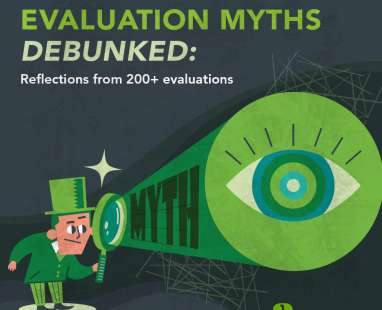
Evaluation Myths Debunked: Reflections from 200+ evaluations
Read More

Projects
Less than a minute to read
Building sustainable fisheries capacity across the Pacific: Review of Te Pātuitanga
Read More

Projects
Less than a minute to read
Connecting Islands and Outcomes: A Community-Centered Evaluation of Tuvalu Programme 2018 - 2021
Read MoreMonitoring + Evaluation Frameworks
Allen + Clarke is experienced in developing the right evaluation frameworks for large-scale and complex policies and programmes. We work with you to tailor monitoring frameworks so you get the data insights you need to measure your impact.
Looking for more information? We've provided a full overview of our process here.
-
Theory of Change - analysing how the activities in your initiative make change over time to form the foundations of your evaluation framework.
-
Programme Logic - developing a model that connects your initiative to its impacts over the short, medium, and long term.
-
Monitoring + Measurement - establishing key performance indicators, evaluation questions, and data collection points to generate important data insights that improve your evaluation framework.

Working with us
Our Process

Understand
We clarify objectives by challenging assumptions and gathering insights.

Plan
We craft a tailored roadmap to prevent future complications.

Deliver
We execute with transparency while proactively addressing emerging challenges.

Review
We validate recommendations through inclusive sensemaking sessions.

Close
We reflect on learnings while recognising team accomplishments.
FAQs
Frequently Asked Questions
Can you evaluate initiatives that don't have clear objectives or baseline data?
Yes, we often evaluate initiatives that don’t have clear objectives or baseline data. In those cases, we would begin by developing a theory of change or identifying appropriate indicators to ensure that we are asking the right questions. While baseline data is valuable, we can also conduct a meaningful evaluation using other methods such as contribution analysis.
How do you measure intangible outcomes like wellbeing or community resilience?
At the outset of an evaluation, we agree with you how we will measure intangible outcomes. We use qualitative methods to capture rich narratives about participant experiences and can use existing frameworks to assess holistic wellbeing. We also have experience using participatory techniques where communities define and assess their own success criteria. These approaches can provide meaningful insights beyond simple metrics.
How do you communicate complex evaluation findings to different audiences?
We can produce outputs which are tailored to different audiences’ needs and preferences. For example, a comprehensive technical report might be accompanied by a separate executive summary, visual quick-reference dashboards, presentation slides, or one-pagers. These can be tailored for different audiences such as technical specialists, decision-makers, interested stakeholders, or the general public. We can also deliver workshops or presentations to a range of audiences to help them engage with the findings.
Can you evaluate programs that operate across multiple sites or regions?
Yes, we regularly evaluate programs that operate over multiple sites or regions. Our team can travel to multiple sites either in New Zealand, Australia, or internationally as needed, or we can use digital tools to enable remote data collection.
Depending on the scope of the evaluation we can use a sampling approach to select representative sites, use comparative case studies to understand contextual differences, and use a mixture of methods to balance the depth and breadth of the evaluation data.